
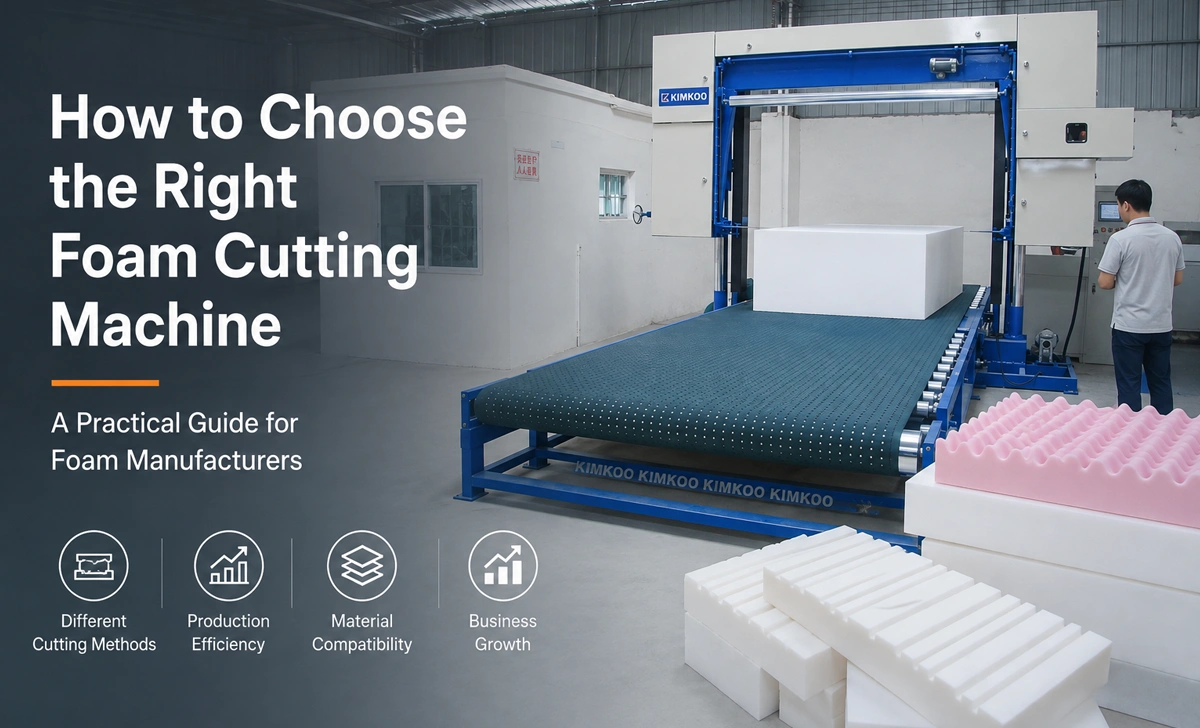
Choosing the right foam cutting machine is an important decision for manufacturers working with foam materials. Different industries, including mattress production, furniture manufacturing, packaging, automotive, and insulation, have different requirements for foam cutting accuracy, production efficiency, and product design flexibility.
With various foam processing methods available, selecting suitable foam cutting equipment requires a clear understanding of your materials, production volume, cutting requirements, and final product applications. As an experienced industrial machinery manufacturer, Kimkoo Mattress Machinery provides professional foam cutting solutions designed for different manufacturing needs.
Understanding Your Foam Cutting Requirements Before Choosing Equipment
Before investing in a foam cutting machine, manufacturers should first evaluate their production requirements. Foam materials vary significantly in density, thickness, and structure, which means different cutting methods may be needed for different applications.
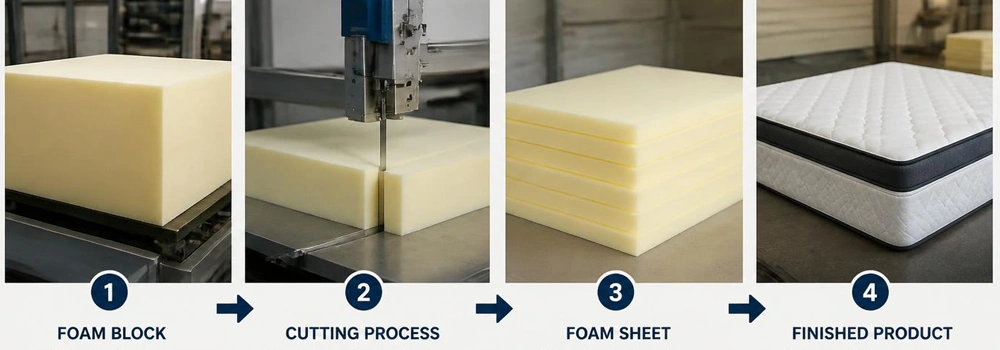
For example, mattress factories often require accurate foam slicing for mattress layers, while furniture manufacturers may need flexible cutting methods to create different shapes and designs. Packaging companies may focus more on customized foam inserts with complex profiles.
Understanding the foam cutting process and production goals helps manufacturers select equipment that improves efficiency while reducing material waste.
Different Foam Cutting Methods for Different Applications
There is no single cutting method that fits every foam production requirement. Modern foam manufacturers usually select equipment based on whether they need standard size cutting, customized shapes, or foam block processing.
Horizontal Foam Cutting for Accurate Foam Slicing
When manufacturers need to divide large foam blocks into consistent sheets, horizontal cutting technology is often an ideal choice. This cutting method is widely used for mattress layers, cushions, and other foam products that require uniform thickness.
A horizontal foam cutting machine is designed for efficient foam slicing with digital thickness control and stable material transportation. With automatic control systems and optional support devices, it helps manufacturers achieve accurate cutting results for continuous production.
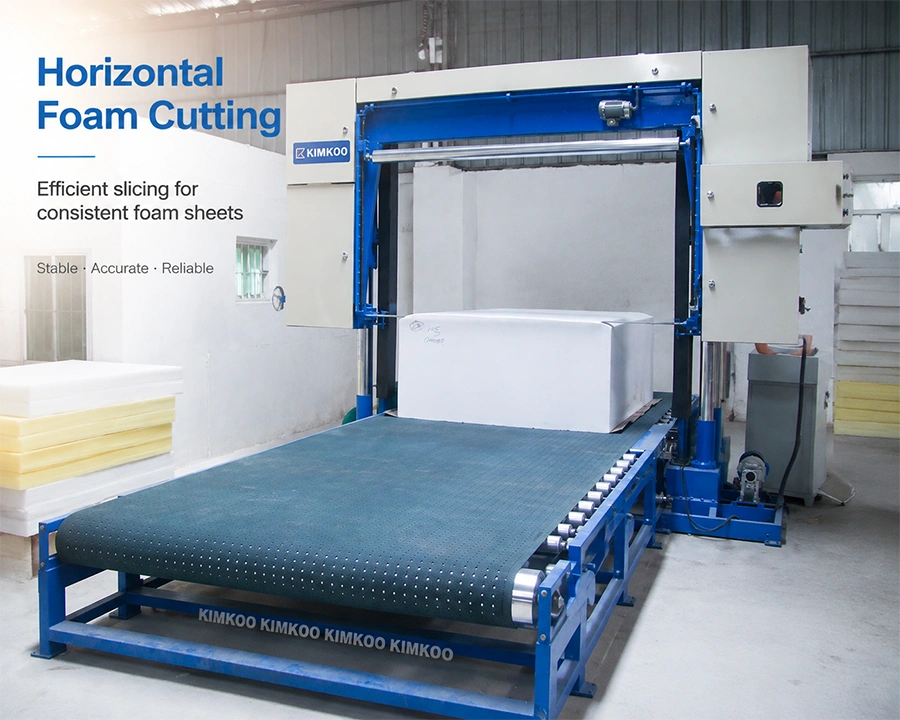
This type of cutting method is especially suitable for businesses producing large quantities of standard foam sheets where consistency and production efficiency are important factors.
CNC Contour Cutting for Complex Foam Shapes
For manufacturers producing customized foam components, traditional straight cutting methods may not provide enough flexibility. Advanced CNC foam cutting technology allows machines to create complicated 2D and 3D foam shapes with high precision.
A foam contour cutting machine uses computerized control systems and advanced blade technology to process different foam materials, including PU foam, PE foam, latex foam, rebond foam, and other soft materials.
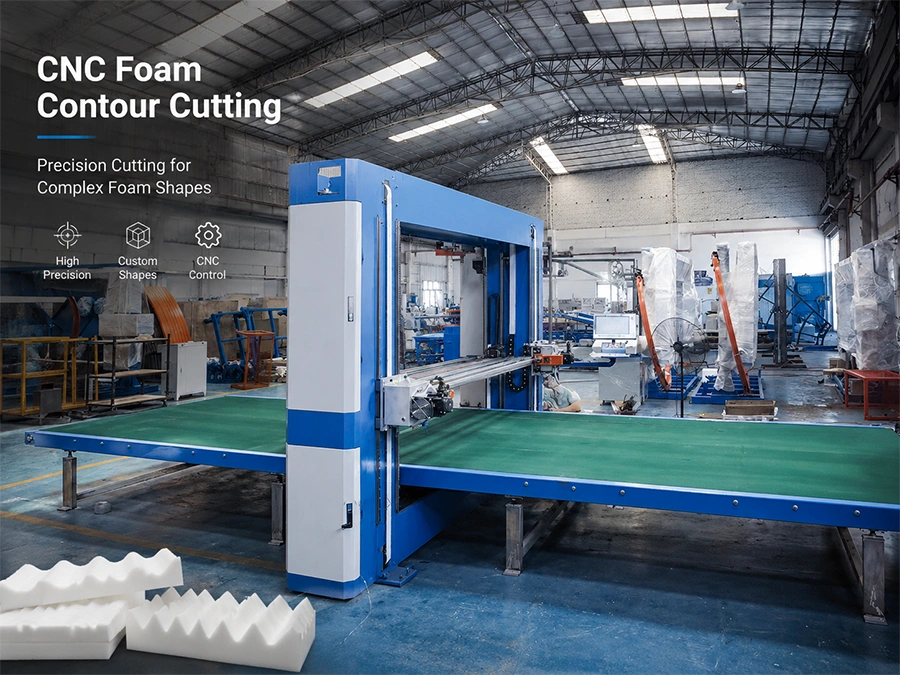
This technology is widely used in industries such as automotive seats, customized furniture, specialty packaging, and other applications requiring unique geometric designs.
Compared with traditional cutting methods, CNC contour cutting provides greater flexibility for manufacturers who need customized shapes and complex patterns.
Vertical Foam Cutting for Flexible Foam Block Processing
Vertical cutting technology provides another practical solution for foam manufacturers who need flexible trimming, splitting, and block sizing operations. It is especially useful when processing large foam blocks into required dimensions.
A vertical foam cutting machine offers precise positioning and stable cutting performance through a vertical blade structure. It can process various soft materials, including PU foam, PE foam, EVA, PVC, bonded foam, and other flexible materials.
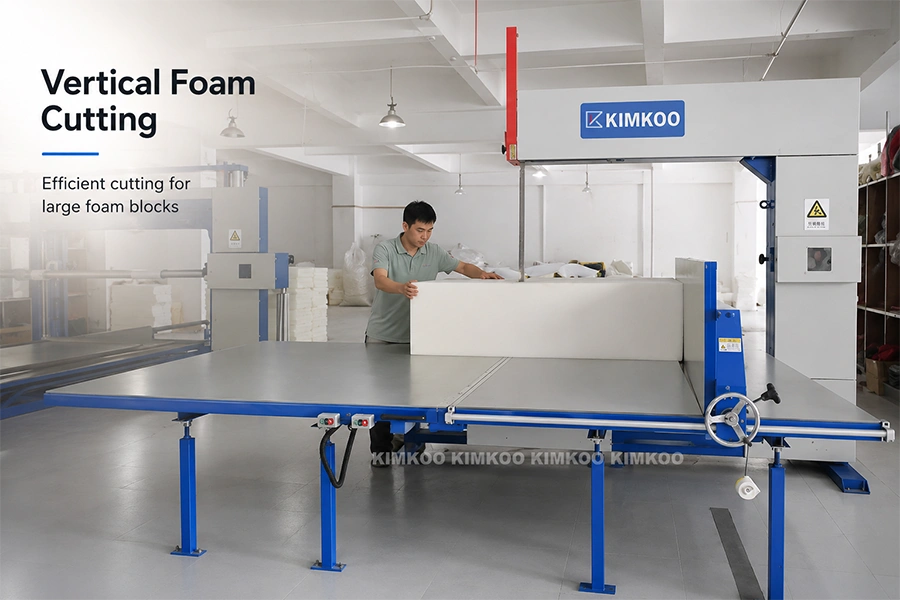
This type of equipment is commonly used for foam block trimming, material sizing, and customized production requirements where flexibility and easy operation are important.
Key Factors When Selecting Foam Cutting Equipment
Choosing suitable foam cutting equipment depends on several important factors. Manufacturers should consider foam materials, cutting accuracy, production capacity, and product applications before making a decision.
The type of foam material is one of the most important factors. Different materials, such as PU foam, memory foam, latex foam, and rebond foam, may require different cutting methods to achieve clean and accurate results.
Production volume is another key consideration. High-volume manufacturers usually need automated systems that can maintain stable performance during continuous operation, while smaller factories may focus more on flexibility and cost efficiency.
Cutting accuracy and product design requirements should also be evaluated. Companies producing standard foam blocks may prioritize speed and consistency, while manufacturers creating customized products may require advanced CNC cutting capabilities.
Automation level is also becoming increasingly important in modern foam production. Machines equipped with CNC control systems, servo motors, and intelligent software can help reduce manual operation, improve productivity, and maintain consistent quality.
How to Choose the Right Foam Cutting Solution for Your Factory
Selecting the best foam cutting solution depends on matching the machine capabilities with your actual production needs.
If your factory mainly produces standard foam sheets for mattresses, cushions, or similar products, a slicing solution may provide the highest efficiency. If your business focuses on customized foam shapes, complex designs, or special applications, CNC contour cutting technology may be more suitable.
For factories that need flexible foam block processing, trimming, and sizing, vertical cutting equipment can provide an effective solution with reliable operation and accurate results.
Before purchasing equipment, manufacturers should evaluate:
- The types of foam materials being processed
- Required cutting thickness and dimensions
- Production volume
- Product design complexity
- Required automation level
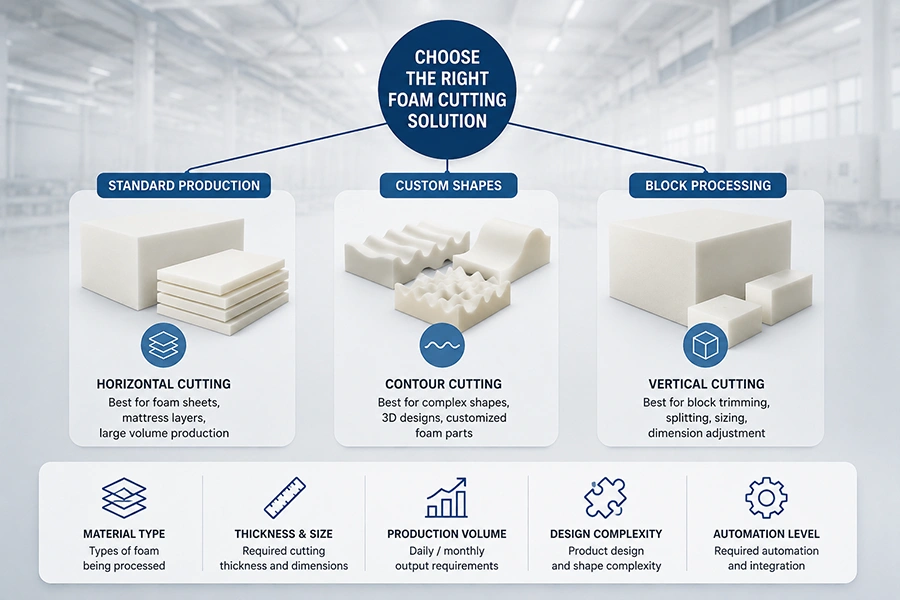
A correct evaluation process can help businesses avoid unnecessary investment and choose equipment that supports long-term production growth.
How Kimkoo Mattress Machinery Supports Foam Manufacturers
Kimkoo Mattress Machinery specializes in manufacturing professional foam processing machines and mattress production equipment for global manufacturers.
With years of experience in industrial machinery development, Kimkoo understands that every factory has different production challenges. Different customers require different cutting methods depending on their products, materials, and production goals.
Instead of providing a single standard solution, Kimkoo Mattress Machinery offers various foam processing solutions designed for different applications. From precision foam slicing to complex shape cutting and foam block processing, manufacturers can select suitable equipment according to their manufacturing requirements.
By combining reliable mechanical design, advanced control systems, and practical manufacturing experience, Kimkoo helps customers improve production efficiency and achieve consistent foam cutting quality.
Conclusion
Selecting the right foam cutting machine starts with understanding your production requirements. Different industries require different cutting methods depending on materials, product designs, and manufacturing processes.
Whether your factory needs accurate foam sheets, customized foam shapes, or flexible foam block processing, choosing the correct cutting technology can significantly improve efficiency and product quality.
By evaluating your application requirements carefully, you can find the most suitable foam cutting solution for your business. Kimkoo Mattress Machinery continues to provide reliable foam processing equipment for customers worldwide, supporting modern foam manufacturers with efficient and precise cutting technology.